
Season 3 Episode 61: HIPAA & Your Teen: The Form That Could Save Time, Tears & Trouble
Feb 10, 2026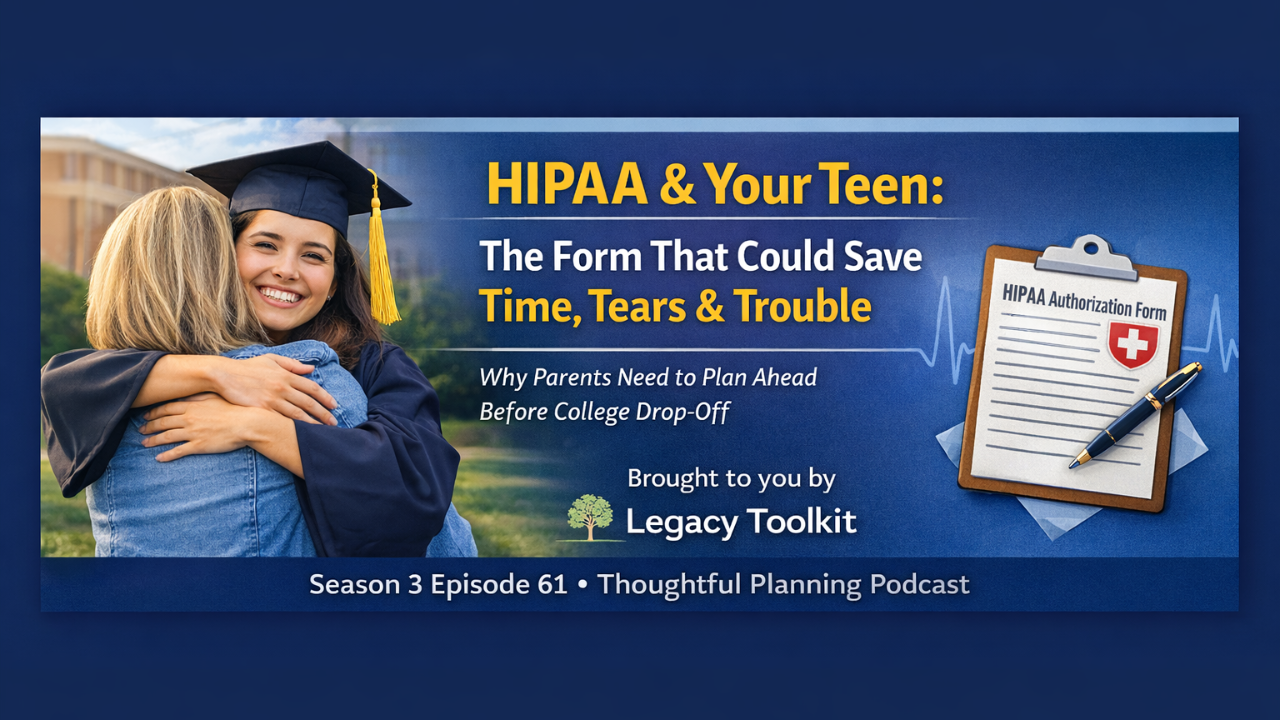
When your child turns 18, everything changes, especially when it comes to medical privacy.
Many parents are shocked to find that they no longer have the legal right to receive medical updates, even in an emergency. That’s where the HIPAA Authorization Form becomes essential.
In this post, based on Episode 61 of the Thoughtful Planning Podcast, we walk parents through what this form does, how it differs from a Medical Power of Attorney, and how to make sure you're not left in the dark when it matters most.
Why Medical Privacy Shuts Parents Out at 18
Turning 18 may feel like a birthday celebration, but legally, it marks a dramatic shift. Once your teen becomes an adult in the eyes of the law, you no longer have automatic access to their medical records, even if you’re footing the tuition bill or still covering them under your health insurance.
We recently read a social media post about a heartbreaking story from a parent at a senior awards ceremony. Their college-aged child had a serious accident, and the hospital wouldn’t release any information because they lacked one crucial document: a HIPAA Authorization Form.
HIPAA Authorization vs. Medical Power of Attorney: What’s the Difference?
Think of your planning documents like a team:
- 🗣 Living Will = the voice (states your wishes)
- 🫶🏽 Medical Power of Attorney (MPOA) = the hands (gives someone power to act)
- 👀 HIPAA Authorization Form = the eyes (allows access to medical info)
Many families assume that having a Medical Power of Attorney is enough. But unless it’s activated (i.e., the person is incapacitated), the hospital may still refuse to share details, especially in early or unclear situations.
When a HIPAA Form Matters
Here are some everyday scenarios where this form becomes essential:
- Your conscious 20-year-old is in the ER with a broken leg. The hospital might not speak to you without written permission.
- Your child is away at college. A crisis hits. You're calling from another state, but staff can't verify your legal right to updates.
- You’re not the named medical agent, but still a trusted adult needing to coordinate care.
A HIPAA Authorization Form removes the guesswork and helps medical teams share critical info faster and more confidently.
Two HIPAA Form Options in Texas
Texas residents have two main paths for completing a HIPAA Authorization Form:
Option 1: eFileTexas HIPAA Release
- Pros: Guided interview, easy to complete online
- Cons: Very broad access (includes mental health, genetic data, HIV status)
- Notary Required? Yes
- Expiration: None unless revoked
Best for: Families with high trust who want a one-and-done approach.
Option 2: Authorization to Disclose Protected Health Information offered by the Texas Attorney General HB300 Form
- Pros: Lets you choose what to share (checkboxes for mental health, substance use, etc.)
- Cons: Not guided like the eFile site
- Notary Required? No, but recommended
- Expiration: You set the timeline
Best for: Teens who want more control over their privacy.
Practical Tips for Parents & Teens
- Blue pen only: Helps distinguish originals from copies
- Label clearly: “Emergency Medical Forms” in glove boxes or folders
- Send to doctors now: Don’t wait for an emergency
- Review regularly: Especially before heading to college or changing agents
Remember, it doesn’t have to be the parent listed as the agent or HIPAA contact. Teens should pick someone they trust and that might be a sibling, aunt, or close friend.
Action Steps
- Talk to your teen about what HIPAA is and why it matters
- Choose the right form based on your teen’s comfort level
- Complete the form and sign it with a notary (recommended)
- Distribute copies to medical providers, family, and trusted adults
- Store a copy in a glove box or emergency file
- Log who has a copy and set a reminder to revisit it annually
Need Help Starting the Conversation?
Try this script:
“I know you’re an adult now, and this form doesn’t give me control. It just makes sure someone you trust can get updates and help if you’re hurt. It’s like a fire extinguisher behind glass and we hope we never need it.”
Want to Take the Next Step?
Here are the links we mention in the podcast:
- 🎧 Listen to Episode 61 on YouTube, search Thoughtful Planning
- 📝 Texas eFile HIPAA Release
- 📄 Texas Attorney General HB300 Form
- Search ‘Hipaa’ & scroll down to the file labeled ‘hb300 Authorization Disclose Health Info’
- 📚 Living Will & Medical POA Series (Episodes 56–60) on YouTube, search ‘Thoughtful Planning’
Brought to You By
🧡 Legacy Toolkit – Helping families plan before a crisis.
🎙️ Thoughtful Planning Podcast with Santiago & Honey Bueno
Every chapter you write today shapes your legacy tomorrow.
